

Difference Between Mole And Melanoma
Posted by Beauty Source on Jul 24th 2019
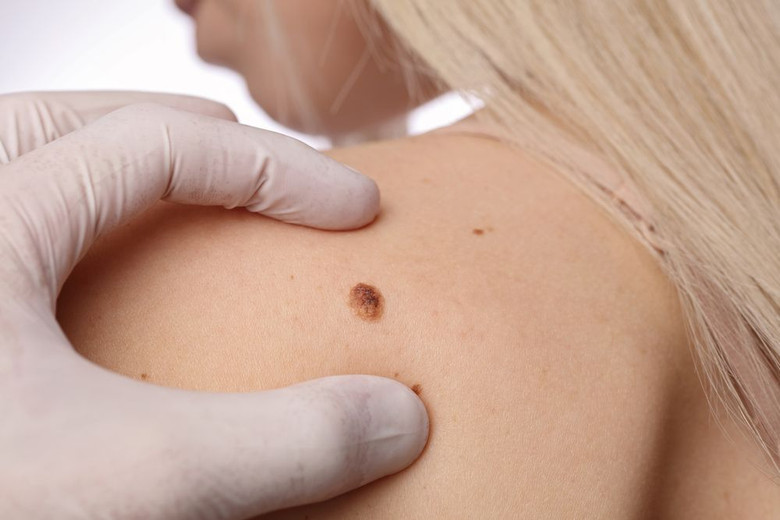
Everyone has moles on their body. Both mole and melanoma have similar characteristics, but one can be dangerous. To the untrained eye, they may look the same, so it is best to educate yourself on identifying the differences.
What Is A Mole?
Moles develop when melanocytes, cells that give skin its pigment, grows in clusters instead of evenly throughout the skin. A mole or nevi usually is smaller than a 1/4 inch in width, is round or oval with a distinct edge, can have a flat or raised surface, and is commonly pink, tan, or brown. Moles are classified into three different types:
- Congenital mole - Moles you are born with.
- Common mole (also called acquired mole) - Harmless moles that appear on the skin after birth. Most people have around 10-40 of these on their bodies. Having 50 or more increases the risk of melanoma.
- Atypical mole (also called dysplastic nevus) - Moles that often have an odd shape, are larger than a pencil eraser and show more than one color. An atypical mole may look like melanoma but is not.
Most moles are non-cancerous, but certain moles known as "dysplastic" or "atypical" nevi, which are larger than ordinary moles, have a higher risk of developing into melanoma.
What Is Melanoma?
Melanoma is a form of skin cancer that develops in melanocytes. Melanoma, when left undetected and untreated, can damage nearby healthy tissues and spread to other parts of the body, such as the lung, liver, bone, or brain. The first sign of melanoma is when a change in existing moles occur. It can also appear on normal, healthy skin. The "ABCDE" rule identifies the symptoms of early melanoma.
- Asymmetry - The shape of one half does not match the other half.
- Irregular border - The edges are often ragged, notched, or blurred in outline. The pigment may spread into the surrounding skin.
- Uneven color - Shades of black, brown, and tan may be present. Areas of white, gray, red, pink, or blue may also be seen.
- Diameter - There is a change in size, usually an increase. Melanomas can be tiny, but most are larger than 6 millimeters wide (about 1/4 inch wide).
- Evolving - The mole has changed over the past few weeks or months.
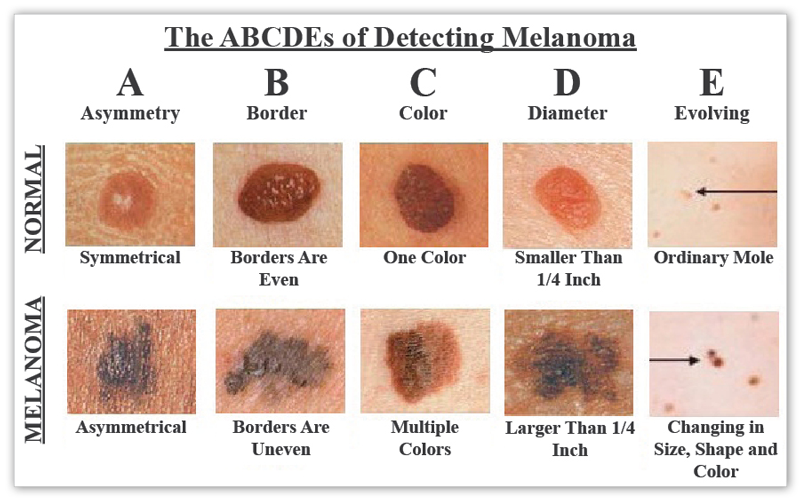
Keep in mind that all these signs do not have to be met for melanoma to develop. It is best to seek medical advice when there is a concern.